Save 15% on select replicas!

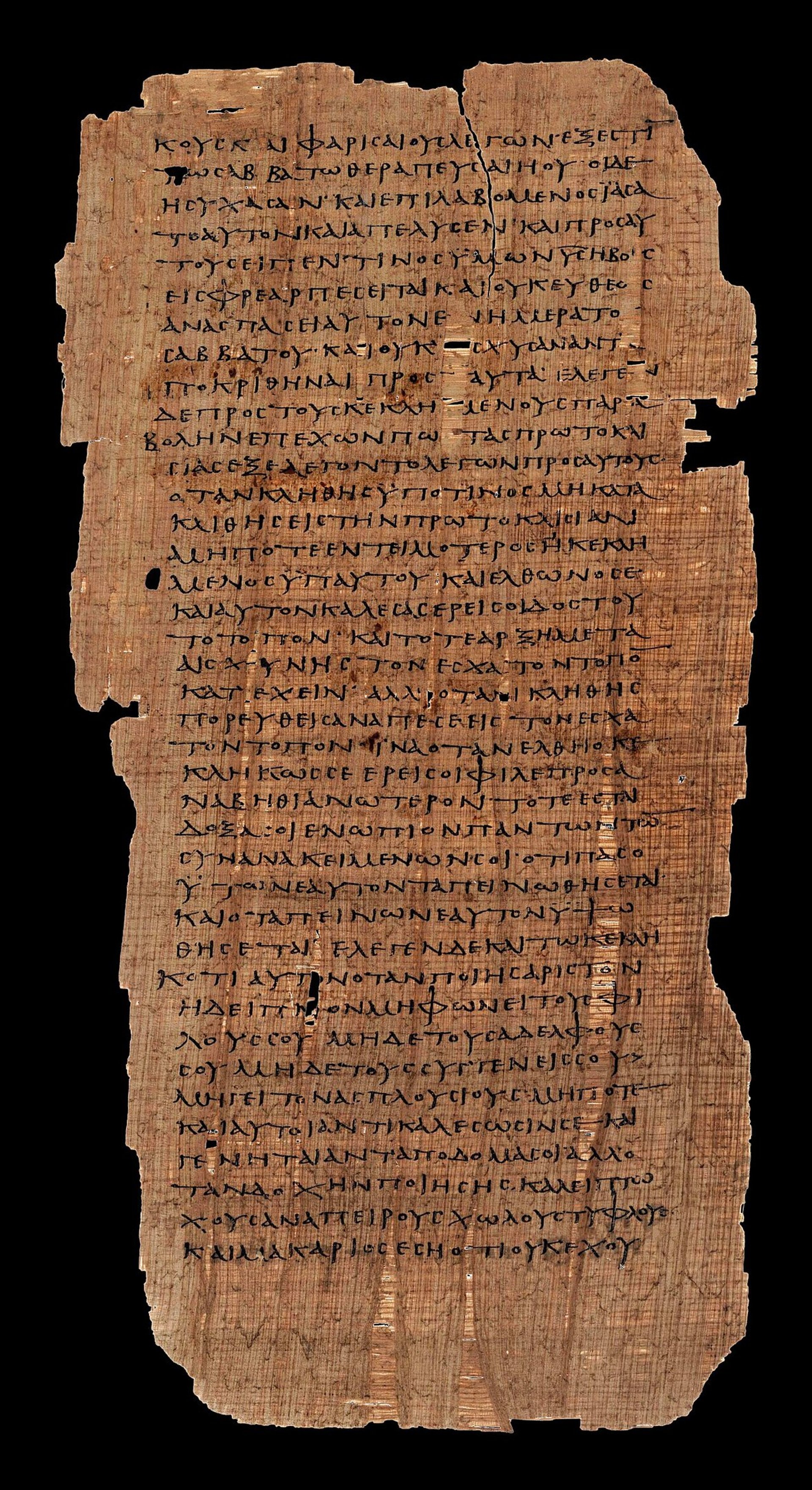
The Process:
The Art of Creating Sacred Scripture Replicas
1. Textual & Paleographic Research
The creation of each replica begins with a rigorous phase of textual and paleographic analysis. This involves consulting high‑resolution images, diplomatic transcriptions, and critical editions of the manuscript in question. Particular attention is given to the morphology of individual letterforms of the scribe, and the characteristic irregularities that define the hand. By examining the fragment within its broader textual tradition—the process ensures that the replica reflects not only the visible text but also the scribal culture that produced it.
This research extends beyond the visible ink. The study of lacunae, line lengths, column structure, helps reconstruct the physical and textual environment of the original artifact. The goal is to ground the replica in the same scholarly rigor that informs academic editions and museum‑quality facsimiles.
2. Papyrus Selection & Preparation
Genuine Egyptian papyrus is selected based on fiber density, vertical‑horizontal layering, and the subtle tonal variations that mirror ancient production techniques. Modern papyrus varies widely in quality, so each sheet is evaluated for translucency, texture, and the interplay of light across its fibers—qualities that significantly affect how ink and aging treatments behave. This careful selection ensures that the replica captures the tactile and visual qualities familiar to papyrologists who work with early manuscript fragments. Once selected, the papyrus is prepared to match the dimensions and irregular contours of the ancient exemplar.
3. Precision Crafting Under Magnification
The shaping of the fragment is performed under magnification to ensure fidelity to the original artifact’s micro‑features. Ancient papyri often exhibit complex edge patterns—feathered tears, wormholes, and fiber separations—that cannot be reproduced convincingly without close visual control. Each contour is cut and refined with reference to the manuscript’s surviving edges. This stage also involves recreating lacunae with scholarly precision. The goal is not merely to imitate damage but to reproduce the fragment’s archaeological profile.
4. Aging, Tonal Accents & Scribal Highlighting
The final stage involves applying controlled aging techniques that emulate the chromatic and environmental changes observed in ancient papyri. This includes subtle tonal modulation, fiber darkening, and the simulation of oxidation patterns. Selective hand‑applied accents bring the replica to life, such as nomina sacra, ink density shifts, faded strokes, and scribal corrections are highlighted to reflect the manuscript’s paleographic character. This approach honors the original artifact’s visual language.